
AI-Powered Voice Agents: The Voice of Today. Have you ever wondered how our whole world is now surrounded by virtual assistants? Answering all customer queries in real-time, adapting to human tone and language, all without human assistance.
According to Deloitte’s 2023 Global Contact Center Survey, 74% of organizations are already deploying chatbots, with 81% utilizing voice and text prompts. These voice agents are evolving into communication powerhouses that revolutionize the customer experience, not merely tools.
What are AI-Powered Voice Agents?
AI-powered voice agents are skilled virtual assistants that use the latest technologies like machine learning, natural language processing, and speech recognition.
Well-known examples are:
Google Dialogflow: A platform for creating conversational user interfaces that smoothly function alongside voice assistants.
Amazon Alexa for Business: Improving communication and productivity in organization settings.
IBM Watson Assistant: Providing AI-powered customer service solutions to enterprises.
These agents are essential to modern organizations because they can process complex queries, respond instantly, and even modify their tone and style to accommodate customer requirements.
Why are Businesses embracing AI Voice Agents?
Using voice agents driven by AI is not a craze; rather, it is a calculated decision with obvious advantages. Let’s examine the reasons why companies are adopting this technology:
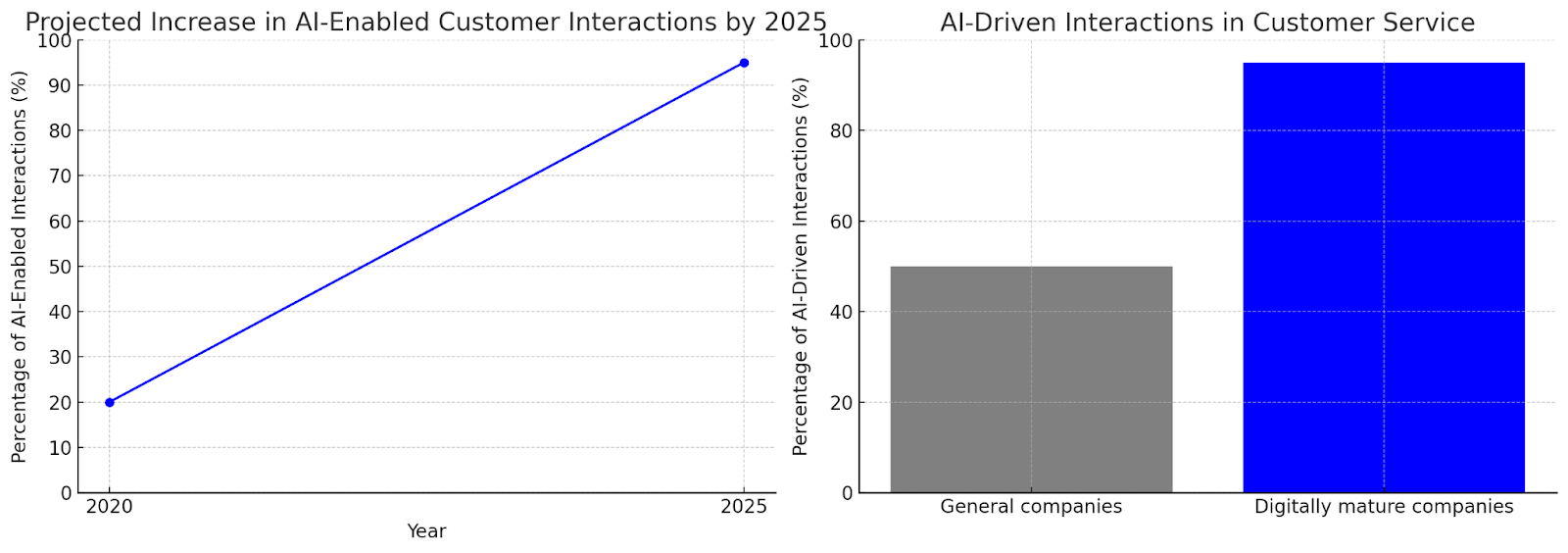 Fig: Businesses growth with AI-powered voice agent’s integration
24/7 Availability without Burnout
Customers expect immediate reactions in today’s fast-paced world. According to Salesforce analysis from 2023, 88% of customers anticipate that businesses will use technological developments to speed up response times. As AI voice agents never sleep, companies can meet these demands without putting too much strain on their human resources.
Cost Efficiency
Businesses can lower operating expenses by automating repetitive processes. According to a Juniper Research report, by 2025, AI voice assistance will save companies $8 billion a year in customer service alone.
Enhanced Efficiency
AI voice agents can help employees internally in an organization by automating repetitive chores like meeting scheduling, reminders, and FAQs. This makes them available for more strategic goals.
Multilingual Capabilities
Meeting a variety of linguistic needs is necessary while operating in global markets. The ability of voice agents to speak fluently in a variety of languages promotes diversity as well as customer satisfaction.
Benefits of AI-Powered Voice Agents
Real-Time Personalization: AI voice agents are able to provide personalized recommendations by analyzing client data. For example, they can make product recommendations based on past purchases, resulting in a customized shopping experience.
Consistent Brand Communication: To preserve consistency and trust, voice agents make sure that every customer engagement reflects the tone and values of your brand.
Data-driven Insights: Each conversation with a voice agent produces useful information. Companies can use this data to analyze patterns, comprehend client problems, and make wise choices.
Real-World Use Cases of AI-Powered Voice Agents
Customer Service
Organizations such as Bank of America use Erica, their AI assistant, to assist clients with bill payment, money management, and spending trend analysis. Since launching, Erica has fielded over 2 billion customer inquiries and handled transactions for 42 million users.
Sales and Marketing
AI voice agents contact potential consumers by making follow-up calls, responding to their questions, and making product recommendations.
Healthcare
Voice agents give basic medical information, make appointments, and send reminders.
Challenges
Despite the indisputable advantages, companies nonetheless face the following obstacles:
Privacy and Security:
Strong security measures are necessary when handling sensitive consumer data.
Maintaining trust requires adherence to laws like the CCPA and GDPR.
Accuracy in Understanding:
Voice agents need to be able to appropriately handle accents and difficult questions.
NLP improvements and ongoing training are essential.
Conclusion
Companies looking to maintain an advantage in an increasingly competitive marketplace must invest in AI-powered voice agents. These agents are changing the norms of communication by improving customer experience, cutting expenses, and increasing efficiency.
The possibilities of AI voice bots are endless as long as technology keeps developing. Companies that invest in this revolutionary innovation now will benefit from improved customer interactions, increased operational effectiveness, and a communication plan that is ready for the future.